
OEM Vancomycin is a glycopeptide antibiotic used for antibacterial Suppliers, Products

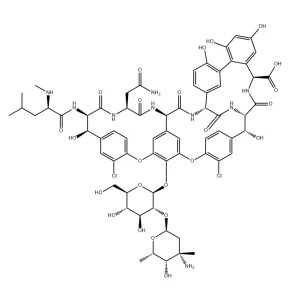
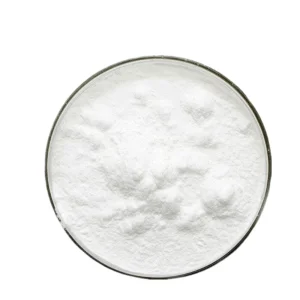
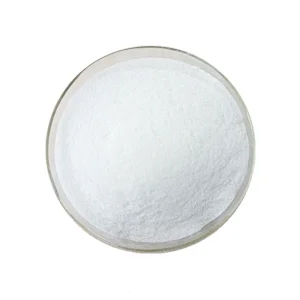
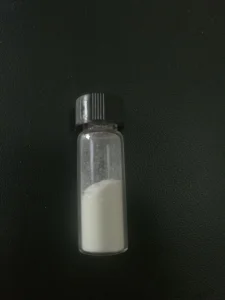
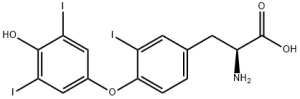
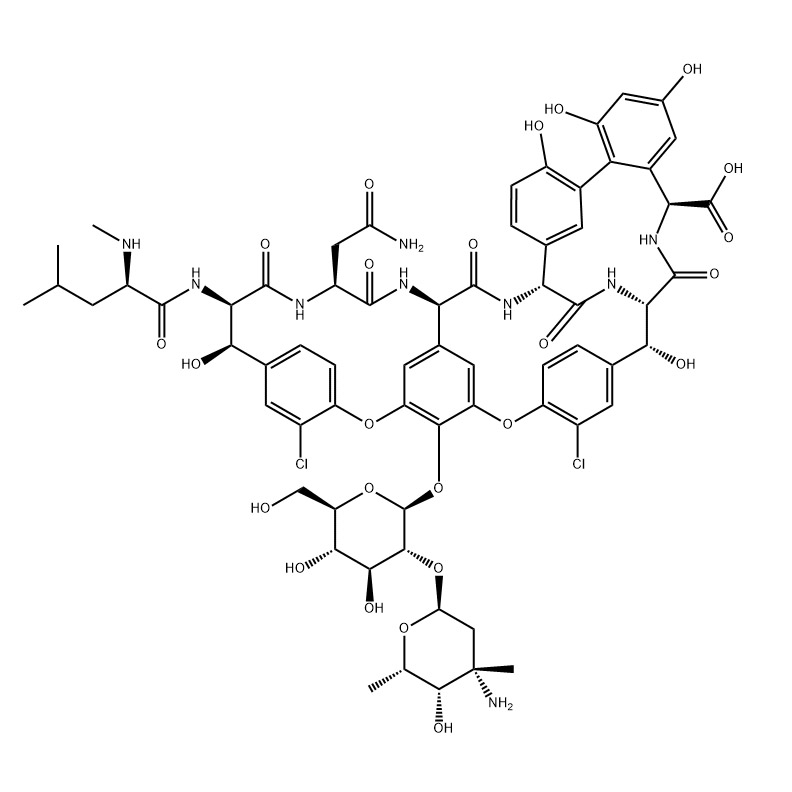
Name: Vancomycin CAS number: 1404-90-6 Molecular formula: C66H75Cl2N9O24 Molecular weight: 1449.25 EINECS Number: 215-772-6 Density: 1.2882 (rough estimate) Refractive index: 1.7350 (estimate) Storage conditions: Sealed in dry, 2-8°C

Product Description

Product Specifications
Name Vancomycin
CAS Number 1404-90-6
Molecular Formula C66H75Cl2N9O24
Molecular Weight 1449.25
EINECS Number 215-772-6
Density 1.2882 (rough estimate)
Refractive Index 1.7350 (estimate)
Storage Conditions Sealed in dry, 2-8°C
Chemical Names & Synonyms
Vancomycin(baseand/orunspecifiedsalts); VANCOMYCIN; VancomycinBase; (3S,6R,7R,22R,23S,26S,36R,38aR)-3-(2-Amino-2-oxoethyl)-44-[[2-O-(3-amino-2,3,6-trideoxy-3-C-methyl-α-L-lyxo-hexopyranosyl)-β-D-glucopyranosyl]oxy]-10,19-dichloro-2,3,4,5,6,7,23,24,25,26,36,37,38,38a-tetradecahydro-7,22,28,30,32-pentahydroxy-6-[[(2R)-4-methyl-2-(methylamino)-1-oxopentyl]amino]-2,5,24,38,39-pentaoxo-22H-8,11:18,21-Dietheno-23,36-(iminomethano)-13,16:31,35-dimetheno-1H,16H-[1,6,9]oxadiazacyclohexadecino[4,5-m][10,2,16]benzoxadiazacyclotetracosine-26-carboxylicacid.
Mechanism of Action & Efficacy

Vancomycin is a glycopeptide antibiotic. Its mechanism of action is to bind with high affinity to the alanylalanine at the poly-terminal end of the precursor peptide of the sensitive bacterial cell wall, blocking the synthesis of the macromolecular peptidoglycan that constitutes the bacterial cell wall, resulting in destruction of the cell wall which kills bacteria.

Vancomycin is effective for serious infections caused by Gram-positive bacteria, especially those caused by methicillin-resistant Staphylococcus aureus, Staphylococcus epidermidis, and Enterococcus that are resistant to other antibiotics or have poor efficacy.

Applications & Indications

It is limited to systemic infections caused by methicillin-resistant Staphylococcus aureus (MRSA) and intestinal infections and systemic infections caused by Clostridium difficile.

Penicillin-allergic patients cannot use penicillins or cephalosporins in patients with severe staphylococcal infection, or those with severe staphylococcal infection who have failed to respond to the above antibiotics, vancomycin can be used.

This product is also used for the treatment of Enterococcus endocarditis and Corynebacterium (Diphtheria-like) endocarditis in people allergic to penicillin, as well as the treatment of staphylococcus-induced arteriovenous shunt infections in hemodialysis patients allergic to penicillin and non-allergic to penicillin.
Frequently Asked Questions (FAQ)
Q: What class of antibiotic is Vancomycin?
Vancomycin is a glycopeptide antibiotic effective against serious infections caused by Gram-positive bacteria.
Q: What is the mechanism of action of Vancomycin?
It binds with high affinity to the alanylalanine at the poly-terminal end of the precursor peptide of the bacterial cell wall, blocking peptidoglycan synthesis and causing destruction of the cell wall to kill bacteria.
Q: What main pathogens is Vancomycin effective against?
It is particularly effective against methicillin-resistant Staphylococcus aureus (MRSA), Staphylococcus epidermidis, Enterococcus, and Clostridium difficile.
Q: Can penicillin-allergic patients use Vancomycin?
Yes, it can be used for severe staphylococcal infections, Enterococcus endocarditis, Corynebacterium endocarditis, and arteriovenous shunt infections in patients who are allergic to penicillin.
Q: What are the storage requirements for Vancomycin?
Vancomycin should be kept sealed in a dry environment at temperatures between 2°C and 8°C.
Q: What are the CAS Number and Molecular Formula of Vancomycin?
The CAS number is 1404-90-6 and the molecular formula is C66H75Cl2N9O24.

Related Products